




IT hardware procurement is the process a company follows to define, quote, approve, buy, receive and renew the computers and equipment its people use. It works best as a repeatable cycle: requisition, comparable quotes, standard models, a formal order and lifecycle planning. PHONIX supports that cycle as a B2B supplier, with quotes in 24 hours.
Key takeaways
- IT hardware procurement is a cycle, not a single purchase: requisition, quote, approval, order, delivery, asset control and renewal.
- A requisition with exact configurations, quantities and destination is what makes quotes from any IT equipment supplier comparable.
- Standardizing a short list of models per user profile simplifies support, spare parts and the next purchase.
- At PHONIX every order becomes a sales order (SO) that PHONIX generates and confirms before payment, which gives finance a clear record.
- Companies register on the PHONIX B2B platform for their country and can request a quote for a full equipment list in 24 hours.
What is IT hardware procurement, and who owns it inside a company?
IT hardware procurement covers every decision between "we need equipment" and "the equipment is in use and on record". It includes laptops, desktops, workstations, monitors and peripherals for people, and components or server components for the company's own infrastructure.
In most companies, four areas share the work:
- The requesting area explains the need: new hires, a new office, a team that needs more performance.
- IT turns that need into specifications, chooses standard models and checks compatibility with what is already installed.
- Purchasing requests quotes, compares suppliers and negotiates conditions.
- Finance approves the budget, the payment method and, if it applies, the use of a credit line.
When those roles are not defined, the same request gets quoted twice and nobody knows which version was approved. If you first want to understand the supplier's side of this chain, read the guide on what an IT hardware distributor does. This article focuses on the process inside the buying company.
How do you write a hardware requisition that suppliers can quote?
A requisition is the internal document that starts the purchase. If it is vague, every supplier interprets it differently and the quotes cannot be compared. A useful requisition answers these questions:
- What is it for? The role or project that will use the equipment, for example a sales team that travels or a new branch office.
- Which configuration? Processor, memory, storage, screen size, graphics card where relevant and operating system edition.
- How many units per line? Separate quantities for each model, not only the total.
- New or refurbished? Whether the use allows refurbished equipment or requires new units.
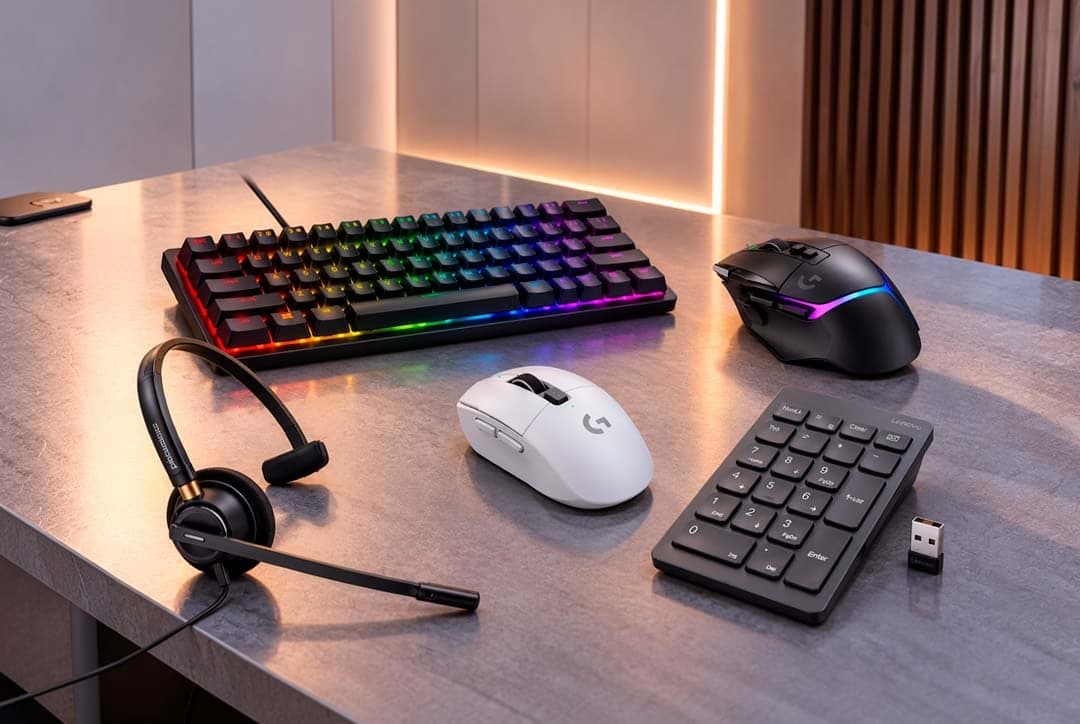
- What else goes with it? Monitors, docking peripherals, keyboards, mice, headsets or extra memory.
- Where does it go? The delivery destination, which defines logistics and the ETA shown on the platform.
- What must it be compatible with? Existing docks, management tools, security requirements or software.
How do you get quotes you can actually compare?
The most common problem in IT procurement for businesses is comparing quotes that do not describe the same thing. One lists a series name, another a part number, a third leaves out the operating system. Ask every supplier to answer with the same structure:
| What to ask for in the quote | Why it matters |
|---|---|
| Exact model and part number | Products with similar names can have very different configurations |
| Full configuration per line | Lets IT confirm that the quote matches the requisition |
| Condition of each line: new or refurbished | Price and expectations change completely with condition |
| Quantity per line and order total | Avoids surprises when the order is confirmed |
| Keyboard layout and power plug | Equipment must work in the country where it will be used |
| Payment method and conditions | Finance needs to know what it is approving |
| Destination | Logistics and delivery information depend on it |
| Alternatives if a model is not available | Gives you a decision ready before it becomes urgent |
Then compare total cost to your door, not unit price. For international purchases, that includes freight, insurance and the duties and taxes of your country, which your customs broker can estimate.
PHONIX quotes across 23+ brands, including HP, Lenovo, Dell, ASUS, Acer, Apple, Samsung, Microsoft, Intel, AMD, Sony, LG, MSI, Gigabyte, Alienware and Google, so one quote can compare brands side by side for the same specification.
Why should a company standardize models for each user profile?
Buying the cheapest option on every request feels efficient, but it leaves the company with dozens of different models, each with its own drivers, chargers, spare parts and support procedures. A short list of approved configurations solves most of that. Start by grouping people by how they work:
| User profile | Typical equipment | Where to browse |
|---|---|---|
| Office and administrative staff | Business laptop or desktop, monitor, keyboard and mouse | Business laptops on the PHONIX USA B2B platform |
| Hybrid and field teams | Light business laptop, headset, webcam, docking peripherals | Peripherals on the PHONIX USA B2B platform |
| Design, engineering and data roles | Workstation or high performance laptop, larger monitors | Full catalog on the PHONIX USA B2B platform |
| Internal infrastructure | Memory, storage and parts for servers | Server components on the PHONIX USA B2B platform |
For each profile, define one main configuration and one approved alternative. Model availability changes by category and market, and an alternative approved in advance means a substitution does not restart the whole approval. You can review every product line on the categories page.
When does refurbished equipment make sense in corporate procurement?
PHONIX offers new and refurbished products, according to availability in each category and market. The decision should be made per use, not per order.
New equipment fits roles that need the latest generation, devices meant for long use and projects where policy requires factory-sealed units. Refurbished equipment can fit training rooms, temporary staff, secondary workstations or budget-limited projects where a business-class machine is more useful than a newer consumer one.
Write the decision in the requisition and make sure the quote states the condition of every line. For refurbished units, ask how cosmetic condition, battery health, included accessories and warranty are described, so IT and finance approve exactly the same thing.
How does the order move from approval to delivery with PHONIX?
Once the quote is approved internally, the process is the same in every PHONIX operation:
- Register your company on the PHONIX B2B platform for your country.
- Validation and B2B access. PHONIX validates the company and enables access to the B2B catalog.
- Build the order, with the cart on the platform or with a sales executive, using the approved quote as reference.
- Sales order and payment. PHONIX generates and confirms the sales order (SO), and payment is coordinated.
- Dispatch according to availability, destination and logistics conditions.
- Tracking of the order from the platform.
The sales order connects your internal approval with what will actually ship: models, quantities, condition and agreed conditions. Keep it with the requisition and the approved quote in the same purchasing file. See the customer process on the PHONIX USA B2B platform and the full guide on how to buy at PHONIX.
Each platform shows the ETA for the order, which depends on the country, the destination and availability. Use it to plan onboarding instead of promising dates before the order is confirmed.
PHONIX has four operations: the United States (Miami, headquarters), Peru (Lima), Colombia (Medellín) and Dubai, and distributes internationally from them. Companies in countries without a local operation usually work with PHONIX USA.
How should a company pay for IT hardware?
PHONIX accepts bank transfer and card, and offers credit lines for qualified clients. Payment conditions depend on each operation, so confirm them with your sales executive when you open the account.
A credit line helps companies that buy regularly or need to equip a new team before the next budget is released. Qualification depends on the company, so ask early.
In every case, payment is coordinated after PHONIX confirms the sales order, so finance pays for a confirmed list instead of an estimate.
How do you manage the hardware lifecycle after delivery?
IT hardware procurement does not end when the boxes arrive. What happens next defines how easy the next purchase will be.
- Receive against the sales order. Check models, quantities and condition against the SO before distributing the equipment.
- Register every asset. Record serial number, model, configuration, user, location and purchase date. Without that register, nobody knows which devices are due for renewal.
- Keep the documentation together. Requisition, quote, sales order and manufacturer documentation should live in the same place.
- Plan renewal by profile. Review each profile based on performance, support cost and team needs, not only device age, so the next quote is requested calmly instead of under pressure.
- Retire equipment safely. Remove company data following your security policy before a device leaves, and update the register.
Frequently asked questions
What is IT hardware procurement?
IT hardware procurement is the process a company uses to specify, quote, approve, buy, receive and renew its computing equipment. It includes laptops, desktops, workstations, peripherals, components and server components.
How do companies buy IT equipment from a supplier?
They define the requirement, request comparable quotes, approve one internally and place the order. At PHONIX the company registers on the B2B platform for its country, builds the order and pays once PHONIX confirms the sales order (SO).
What should a quote from an IT equipment supplier include?
Exact model and part number, full configuration, condition of each line, quantities, keyboard layout and plug type, payment conditions and destination. With that information, quotes from different suppliers can be compared.
Can PHONIX quote a complete list of IT hardware?
Yes. PHONIX can quote laptops, desktops, workstations, peripherals, components and server components from 23+ brands in the same request, and you can request a quote in 24 hours.
Does PHONIX sell IT hardware to individuals?
No. PHONIX sells only to businesses: resellers, retailers, integrators, distributors and companies that buy for their own operations.
Ready to organize your next IT hardware purchase?
Register your company on the PHONIX USA B2B platform to explore the catalog and build your first order, or contact the PHONIX team with your equipment list and request a quote in 24 hours.